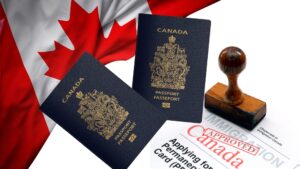

Canadian permanent resident status alone does not determine whether you need a Schengen visa. The key factor is usually the nationality and passport or travel document you will use. Some passport holders are visa-exempt for short stays, while others must apply. If you need a visa, you can generally apply from Canada when the responsible authority accepts proof that you legally reside there.
The short answer: Canadian PR status is not the deciding factor
A Canadian permanent resident does not automatically receive the same Schengen travel treatment as a Canadian citizen. The visa decision is generally based on the passport or travel document used, while Canadian permanent residence can help establish where you are allowed to submit an application.
- Canadian citizen: Check the current short-stay rule for the Canadian passport you will use.
- Canadian permanent resident with a visa-exempt passport: You may not need a Schengen visa for a qualifying short stay, but you must still meet entry conditions and permitted-stay limits.
- Canadian permanent resident with a visa-required passport: You will generally need to apply for a Schengen visa before travelling, unless another exemption applies.
A person’s residence status in another country does not replace passport nationality for this purpose. For example, a US permanent resident is assessed primarily by the passport or travel document used, not simply by holding US permanent residence.
The Schengen Area includes European countries with common short-stay border arrangements. Because requirements can depend on nationality, travel-document type, purpose and length of stay, use the current instructions of the country responsible for your application.
Schengen visa, Canadian PR card, and PRTD are different documents
These documents solve different travel problems. A Schengen visa concerns permission to seek entry for a qualifying visit. A Canadian PR card and a Permanent Resident Travel Document concern Canadian permanent resident status and, in different circumstances, your return to Canada.
| Document or status | What it does | What it does not do |
|---|---|---|
| Passport or travel document | Identifies you and determines which nationality-based visa rules may apply. | Does not prove that every entry condition is met. |
| Canadian permanent resident status | Shows your immigration status in Canada and may support an application from Canada. | Does not automatically make you visa-exempt for Schengen travel. |
| Canadian PR card | Provides evidence of permanent resident status and is commonly relevant to travel back to Canada. | Is not a Schengen visa. |
| Schengen visa | Allows a visa-required traveller to seek entry under the stated conditions. | Does not give permission to return to Canada. |
| Permanent Resident Travel Document | May allow a permanent resident outside Canada without a valid PR card to travel back to Canada by commercial carrier. | Is not a European visa. |
Before leaving, check both sides of the trip. Canada advises permanent residents to check destination-country visa requirements and explains that a permanent resident outside Canada without a valid PR card may need a Permanent Resident Travel Document for the return to Canada.
Can a Canadian permanent resident apply from Canada?
A Canadian permanent resident can generally apply from Canada when the responsible authority accepts Canada as the applicant’s country of residence and the applicant can provide proof of legal residence. A permanent resident is different from someone who is only visiting Canada.
The Embassy of the Czech Republic in Ottawa states that a non-exempt third-country national may apply for a Schengen visa when residing in Canada, including a person holding a permanent residence permit or a qualifying long-term residence permit. Its guidance refers to a residence permit valid for at least three months after the expected expiry of the Schengen visa. Read the current instructions for the country responsible for your trip because jurisdiction and document rules can differ. Source: General information | Embassy of the Czech Republic in Ottawa.
Prepare evidence connecting you to Canada, such as your valid PR card or another accepted document proving legal residence. The responsible authority may also specify where applications are submitted and whether an external application centre is used.
Can you apply from a country where you are not a resident?
Do not assume that you can submit a Schengen application from any country where you happen to be present. Authorities commonly distinguish between legal residence and temporary presence. If you are temporarily visiting Canada without Canadian permanent or qualifying long-term residence, read the responsible country’s instructions for non-resident applications before booking an appointment.
Choose the responsible Schengen country for your itinerary
When one trip includes several Schengen countries, the responsible authority is generally connected to your main destination. This usually means the country where you will spend the longest period. If stays are equal, follow the responsible country’s current rule.
Use this worksheet before completing a form:
| Country | Arrival | Departure | Nights | Purpose or accommodation |
|---|---|---|---|---|
| (Country 1) | (date) | (date) | (number) | (details) |
| (Country 2) | (date) | (date) | (number) | (details) |
| (Country 3) | (date) | (date) | (number) | (details) |
Compare the nights, identify the longest stay, and then use that country’s official consular or visa-centre instructions. Applying to the first arrival country can be incorrect if another country is your main destination.
Where can you find a Sweden Schengen visa application form?
If Sweden is the responsible country, use the current application form and submission instructions published by the official Swedish government or consular authority for Canada, or by the application route that authority designates. The official instructions should identify the correct form, appointment route and supporting documents. Do not use a Swedish form merely because Sweden appears briefly in a trip whose longest stay is elsewhere.
Documents Canadian permanent residents should prepare
The exact checklist depends on the responsible country, your nationality, purpose of travel and application channel. Organize these categories, then compare them with the destination authority’s current list.
Identity and Canadian residence
- Passport or travel document meeting the specified validity and blank-page requirements.
- Completed application form in the required format.
- Canadian PR card or other accepted proof of legal residence.
- Previous passports, visas or travel records if requested.
- Photographs meeting the responsible country’s specifications.
Trip and accommodation evidence
- Itinerary showing countries, dates, transportation and main destination.
- Accommodation evidence, such as reservations or an accepted invitation.
- Evidence explaining the purpose of travel.
- Travel medical insurance meeting the authority’s requirements.
Financial position and reasons to return
- Recent financial records in the requested format and period.
- Employment, study, business or family evidence accurately describing your circumstances in Canada.
- Information about who will pay for the trip.
- Explanations for unusual deposits, gaps, itinerary changes or inconsistencies.
Appointment materials
- Appointment confirmation and payment receipt, if required.
- Originals and copies in the requested format.
- Translation or certification documents where required.
- Materials needed for biometrics or an interview, if applicable.
Photo dimensions, passport validity, insurance coverage, financial thresholds, biometrics, translations and appointment procedures can be destination-specific.
The application sequence from visa check to passport return
- Identify the passport rule. Determine whether your passport or travel document is visa-exempt or visa-required.
- Confirm the destination and purpose. Record every country you will visit.
- Choose the responsible country. Apply the main-destination rule.
- Confirm that you may apply from Canada. Prepare proof of legal residence.
- Use the current form and checklist. Keep the form consistent with your evidence.
- Book the correct appointment. Use the official consular route or designated application centre.
- Attend and provide biometrics if required.
- Submit the passport and application. Ask how the passport will be retained and returned.
- Monitor the application and collect the passport. Check dates, entries and permitted duration if a visa is issued.
What is the 90/180 rule for Schengen travel?
The 90/180 rule generally means that a short-stay traveller may spend no more than 90 days in any rolling 180-day period in the Schengen Area, subject to the applicable entry category and travel-document rules. It is a calculation limit, not a guarantee of admission.
What are the photo requirements for a Spain visa?
Spain visa photographs must meet the current specifications published by the Spanish government or consular authority for Canada, or by its designated Canadian application route. Use those official instructions for the required dimensions, background, facial position and photograph age. Do not assume that a photograph accepted for a Canadian immigration application will meet Spain’s requirements.
Fees, timing, and travel planning
Separate the government Schengen visa fee from any external application-centre service charge, courier fee, optional premium service or other listed cost.
There is no single universal Schengen visa fee. An external application centre may list a service charge in addition to the government fee. Amount, currency, payment method and refund terms can vary by location and destination. Check the responsible country’s current Canadian instructions and the designated centre’s payment page before paying.
- fee category for your age, nationality and application type;
- government fee and separate centre or courier charge;
- accepted payment method and currency;
- appointment availability;
- processing guidance and passport-retention arrangements;
- consequences of cancellation, refusal or a changed itinerary.
A booked flight does not establish eligibility or guarantee approval. Leave enough time for missing documents, appointment delays, passport retention or additional requests.
Four situations, four different next steps
1. A Canadian citizen travelling on a Canadian passport
Check the current short-stay rule for Canadian citizens and the passport you will use. Entry conditions and permitted-stay rules still apply.
2. A Canadian permanent resident with a visa-exempt passport
Check the visa rule for that passport, not only the PR card. Carry the passport used for the trip and Canadian status documents relevant to your return.
3. A Canadian permanent resident with a visa-required passport
Identify the responsible country, confirm that you may apply from Canada, and prepare proof of Canadian residence. Your PR card does not replace the Schengen visa.
4. A person temporarily visiting Canada
Being physically in Canada does not necessarily give you the right to apply there. Check whether the responsible authority accepts non-resident applications.
A multi-country example
Suppose a traveller plans five nights in France, three nights in Germany and two nights in Sweden. France is the longest stay, so the traveller should begin with France’s current consular jurisdiction. Sweden appearing in the itinerary does not make Sweden responsible.
Before leaving Canada, check both sides of the journey
- Does your passport permit the planned Schengen entry, with a visa if required?
- Does an issued visa show the correct dates, entries and duration?
- Does your passport meet validity requirements?
- Will your Canadian PR card remain valid for the return journey?
- If you will be outside Canada without a valid PR card, have you assessed whether a PRTD may be needed?
- Do your itinerary, accommodation, insurance and financial documents match the trip?
A problem with European entry is separate from a problem returning to Canada. A Schengen visa does not solve a missing Canadian re-entry document, and a Canadian PR card does not solve a Schengen visa requirement.
Ararat Canada Immigration provides Canadian immigration, citizenship and refugee services. If you need assistance with the Canadian side of the journey, you can review permanent resident travel document and citizenship applications.
A Canadian visitor visa is a separate document from a Schengen visa. For general background on Canadian visitor-visa planning, you can review this visitor visa information, while the destination country’s official requirements control any Schengen application.
Questions Canadian permanent residents ask before applying
Do Canadian citizens need a Schengen visa?
Check the current rule for the Canadian passport you will use. Permitted-stay conditions still apply when a short stay is visa-exempt.
Can I apply for a Schengen visa from a country where I am not a resident?
Do not assume that you can. Authorities often require an application from the country of legal residence, although limited non-resident rules may exist.
Where can I find the application form for a Schengen visa for Sweden?
Use the current form and instructions published by the official Swedish government or consular authority for Canada when Sweden is responsible for your itinerary.
What is the Schengen visa application fee?
There is no single fee for every application. Check the responsible country’s government fee and any separate charges listed by the designated Canadian application centre.
What is the 90/180 rule for Schengen travel?
It generally limits short stays to 90 days within any rolling 180-day period. Count relevant previous stays carefully.
Do I need a Permanent Resident Travel Document to return to Canada?
You may need one if you are outside Canada, lack a valid PR card and intend to return by commercial carrier. A PRTD is not a European visa.
Can a Canadian permanent resident use a PR card as a Schengen visa?
No. A PR card relates to Canadian permanent residence and does not replace a Schengen visa when your passport requires one.