
If you graduated from a Canadian post-secondary program and want to work here after your studies, the post-graduation work permit (PGWP) is the main pathway to gain open work experience and strengthen a case for permanent residency. This article answers the practical questions recent graduates ask most: who is eligible, how and when to apply, exactly which documents you need, what you can do with a PGWP, common mistakes to avoid, and when it makes sense to seek regulated professional help in Toronto.
Eligibility essentials for the post-graduation work permit
Not every graduate automatically qualifies for a PGWP. The permit is available to students who completed an eligible program at a qualifying institution and who meet IRCC’s detailed requirements. The PGWP exists to allow graduates to gain Canadian work experience that can support a later permanent residency application, but eligibility depends on the type of institution and program you finished.
Refer to the federal PGWP overview for the program purpose and general rules and to the official eligibility page for the precise conditions IRCC applies. These pages explain the core requirements and common scenarios that affect eligibility, including program length and institution type. For authoritative details see the Government of Canada post-graduation work permit overview and the PGWP eligibility page.
Key official references:
PGWP overview and
PGWP eligibility.
Which institutions and programs qualify for a PGWP
Two central rules determine whether your studies make you eligible. First, you must have completed your program at a designated learning institution that offers programs eligible for PGWP consideration. Second, the type of program matters. Public post-secondary institutions such as universities, colleges, and Collèges d’enseignement général et professionnel in Quebec normally qualify. Some private institutions are eligible only when the program leads to a degree or is otherwise recognized under IRCC rules.
Because rules differ by institution type and program, do not assume a school or program qualifies without checking the official guidance. Use the IRCC eligibility page and the IRCC help centre entry on qualifying institutions for specific examples and clarifications.
When and where to apply for your PGWP

Timing is strict and important. You have up to 180 days after you complete your program to apply for a PGWP. Completion can be shown with an official letter from your school confirming program completion, an official transcript, or a copy of your transcript from the school’s website. You do not have to wait until you physically receive your diploma or attend a graduation ceremony to apply, provided you have the completion evidence noted above.
Most applicants must apply online. Since June 21, 2024, you can no longer request a PGWP at a port of entry when entering Canada. If your study permit expires before you apply, IRCC provides limited options for restoring status and applying within a shorter window in some cases. For current application methods and timing rules, see the Government of Canada application guidance and the IRCC help centre pages about how and where to apply and when you may apply before you receive your diploma.
Official application resources: How to apply for a PGWP and the IRCC help centre guidance on applying and timing.
A practical documents checklist you can use now
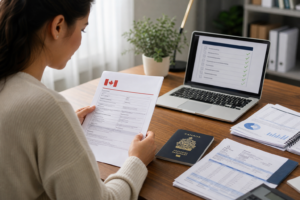
IRCC expects clear documentary proof that you completed an eligible program and that you meet identity and status requirements. Gather these documents before you start your online application to reduce delays.
- Completion evidence — An official letter from your school confirming you finished the program, or an official transcript or a copy of the transcript from the school website. IRCC accepts these as proof that you have completed your studies.
- Study permit history — A record showing that you held a valid study permit while you studied in Canada, if applicable. If your study permit has already expired and you still qualify, review IRCC guidance about restoring status.
- Passport — A clear copy of the passport bio page that will remain valid for the length of the requested permit, and any pages with relevant stamps.
- Photos and identity documents — Passport style photos if IRCC requests them and any national ID that supports identity claims.
- Translations and certified copies — Official translations of any documents that are not in English or French, with a certified translator’s declaration when required.
- Payment receipt — Proof of payment for IRCC fees as required by the online application process.
For exact upload formats, file size limits, and supplementary document requirements, consult the official apply page. Keeping scanned copies in common formats and labelled clearly will speed the online submission.
What a PGWP lets you do: open work rights and employer limits
The PGWP is an open work permit. That means you may accept most jobs anywhere in Canada and you can change employers without needing a new employer-specific work permit. Open work rights make the PGWP valuable for building the Canadian work history that many permanent residency pathways require.
There is one important caveat. Some employers are listed by IRCC as ineligible for hiring foreign nationals under certain programs. You may not take employment with an employer on IRCC’s ineligible employers list. For a concise explanation of open work rights and employer restrictions, see the IRCC help centre entry on what a PGWP allows.
Because PGWP work experience is often a key component in economic class immigration streams, keep careful records of job title, duties, hours worked, and pay. That information is useful later when you assess eligibility for provincial or federal permanent residency streams that value Canadian work experience.
Common mistakes graduates make and how to avoid them

Avoidable mistakes cause delays or refusals. The most frequent errors include missing the 180 day application window, applying at a port of entry, assuming every DLI or program qualifies, and submitting incomplete or uncertified documents. Each of these errors directly affects whether IRCC can process your file.
- Missing the 180 day window — Mark the program completion date and start your application early. If your study permit is about to expire, read the IRCC guidance on restoring status and the shorter timelines that may apply.
- Applying at a port of entry — Do not plan to request a PGWP at an airport or other port of entry. Most applications must be submitted online since mid 2024.
- Assuming every school or program qualifies — Confirm that your program and institution meet IRCC eligibility rules before you apply. Use the IRCC eligibility guidance to check.
- Incomplete evidence — Provide the official completion letter or transcript and clean, certified translations for any documents not in English or French. Missing or uncertified items slow processing and increase refusal risk.
When in doubt, rely on IRCC pages rather than informal advice. The official pages linked earlier explain typical pitfalls and corrective steps you can take.
When to get professional help and how to verify a Toronto RCIC
Most PGWP applications are straightforward and can be completed by the graduate. Consider regulated professional help when your study history is complex, you attended multiple institutions or programs, a program’s eligibility is unclear, you have a prior refusal, or you need representation before an administrative tribunal. A regulated consultant may also advise how PGWP experience fits into a long term permanent residency strategy.
If you seek local assistance in Toronto, verify that the consultant is a Regulated Canadian Immigration Consultant in good standing and that they have the appropriate practice designation. For example, Ararat Canada Immigration publishes founder credentials and practice scope on its about page, including RCIC-IRB Class L3 status that allows representation before IRCC, the Immigration and Refugee Board, and the Canada Border Services Agency. Review a consultant’s published verification details and ask to see their registration number and documentation before you retain services.
Questions to ask a consultant:
- Can you confirm your official registration and practice class?
- Have you prepared PGWP applications recently and what typical issues do you see?
- Will you review my study records and advise whether my program and institution qualify?
- How do you handle document translation and certification?
- What are your formal fees and how do you communicate case progress?
Use the firm’s official contact channels and verify credentials on the consultant’s published about page before sharing sensitive documents. Official firm information is available on Ararat Canada Immigration.
Frequently asked questions
Can I apply for a post-graduation work permit before I receive my diploma?
Yes. You can apply before you receive your physical diploma if you have an official letter from your school confirming program completion, an official transcript, or a copy of your transcript on the school’s website. See IRCC guidance on applying before graduation for the exact documentation accepted: IRCC: apply before you graduate.
How long after graduation do I have to apply for a PGWP?
You must apply within 180 days after you complete your program. If your study permit expires before you apply, special rules may apply and sometimes a shorter time limit is in effect, so check IRCC’s application timing guidance: How to apply for a PGWP.
Can I work for any employer while on a PGWP and what is the ineligible employers list?
The PGWP is generally an open work permit that allows employment in most jobs across Canada. However, you may not work for employers listed by IRCC as ineligible under specific programs. Consult IRCC’s description of open work rights for details: What a PGWP lets you do.
Will a PGWP guarantee work-based permanent residency in Canada?
No. PGWP experience is valuable and often required by economic class immigration streams, but the permit itself does not guarantee permanent residency. Use your Canadian work experience alongside other eligibility factors when planning a PR path, and review federal and provincial programs that assess Canadian work experience.
How can I verify that a Toronto immigration consultant is a regulated RCIC who can represent me?
Ask the consultant to produce their official registration details and practice designation and review their publicly stated credentials. For example, Ararat Canada Immigration lists founder qualifications and RCIC-IRB Class L3 practice status on its about page. Always confirm registration details before sharing documents or paying fees.
Key official resources used in this article include the Government of Canada PGWP overview, the PGWP eligibility page, the Government of Canada application guidance, and the IRCC help centre entries on PGWP purpose, open work rights, and applying before you graduate. Refer to those pages for full, authoritative wording of the rules and for updates.
Would you like a custom document checklist or a review of your study records to confirm PGWP eligibility?